Kavita Di Kahani: Dheeaan

Infanticide in India

Infanticide in India

I completed the final version of the poem ‘Dheeaan’ not long ago when the news of infanticide started to get worse in India, especially in Punjab and Haryana. It seemed that there were new stories more horrific than the last several times a day. The ratio between newly born boys and girls dropped from 1000 to 700 and was still going down. While I recently put the finishing touches on my poem, I had been thinking about it since the senseless India- Pakistan wars in 60′s and 70′s.

I wrote the first version of ‘Dheeaan’ after listening to Noor Jahan’s beautiful rendition of the popular Pakistani war song “Eh Puttar Hattan te Nahi Wikde” meaning “Our sons cannot be bought in the marketplace.” I heard this song during the 1965 India Pakistan war. I still remember watching fighter planes being consumed by flames and exploding in mid-air, unleashing heavy artillery fire and a sea of bombs in the unspoiled wilderness just outside our village before returning to their base,  and huge tanks colliding with equally massive tanks in the Khem Karan and the Wagha sectors. My ancestoral village, Jandiala is almost the same distance (10-15 miles) from Wagha border towards Lahore as the village Bhakna is on the Amritsar side, where I grew up under the auspices of Baba Sohan Singh Bhakna.

Here is Noor Jehan’s video:

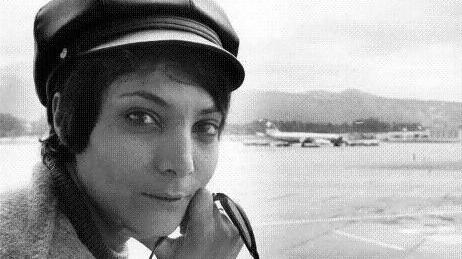
I have always liked Noor Jehan’s melodic voice and this was no different. But as melodic as Noor Jehan’s voice was, or how much I loved its tune, the tone and message of the song always irked me. It wasn’t because I did not understand what was being said of Pakistani patriotism; Indian patriotism or any other country’s patriotic songs are not so different either. It was because of what was left unsaid. If sons cannot be bought at the marketplace, what is being implied about daughters? Are they more expendable or replaceable?

The other obvious reason that I found the lyrics of this song hypocritical was that it was a song about the glorification of senseless wars. In addition to it being a colossal waste of human life, it was even more senseless because it involved brothers fighting with brothers over something that could have been taken care of at the dinner table. The whole world was laughing at them when they were at each other’s throats, not once, but three times. My family and other close relatives, who used to live in district lahore told me just how pointless it truly was. There are Dhillons, Randhawas, Cheemas, Gills, Virks, Chatthas, Bhattis,Ghumans and so on, literally brothers fighting against brothers on both sides of the war and for what?

Only the mothers, fathers, brothers and sisters who lost their loved ones or had them seriously wounded, maimed and incapacitated for the rest of their lives in those avoidable wars could understand the true meaning of the tone of the song.  So while it is a pretty song on the surface with the ever so beautiful Noor Jahan, who, along with Lata Mangeshkar, is one of my all time favorite singers; I wish if such a tone and tenor could be employed in campaigns against wars, the dowry system, infanticide, and in support of women and girl-child rights, both in India and Pakistan and every where else for that matter. There are some helpful organizations such as Nanhi Chhaan, that are making great strides in their activism, but there are some things only musicians, poets, writers, and artists can do.  Check out my write-up on the Nanhi Chhaan foundation at Khalsa College here.

Coming back to my kavita , I rewrote the final version of ‘Dheeaan’ as I watched the same song sung by Noor Jahan posted on the you tube after so many years. And it is my hope that it will provide the story left untold by Noor Jehan’s rendition. The story of the daughters. It has been published in some well known Punjabi magazines and here: Punjabi poem in Gurmukhi. It was only recently that I put this kavita to moving images set to my voice and posted on the you tube and my FaceBook. I would love to hear your comments and if the words of this kavita move you, become my fan on FaceBook where I can let you know when I have new content. After many requests, here is my kavita with English subtitles:

Share

Punjabi Poem: Dheeaan

Share

Introduction to Punjabi Poetry

A Brief History:

Punjabi is the language spoken by all those who either live in Punjab or can trace their roots to the Punjab region. Punjab literally translates to the land of five rivers and at one time extended all the way from Delhi to Afghanistan. The day India celebrates its independence from British rule (August 15, 1947) is also the day when the state of Punjab suffered a historical loss of a tremendous proportion. West Punjab was acquired by Pakistan slicing Punjab more than in half and left Indian Punjab without a capital city (which used to be Lahore, now in Pakistan). This led to creating a new capital city in the form of Chandigarh. The second and equally stunning blow hit Punjab in 1966 when the allegedly majority Hindi speaking state of Haryana and part of Himachal Pradesh were carved out of it and Chandigarh became a Union Territory.

The Punjabi language is not the domain of any ethnic group or religion although the Guru Granth Sahib, the Sikh Holy Book, is also written in poetic Punjabi verse. Under the pretext of National unity, in the Punjab region of Pakistan and India, Punjabi is being systematically replaced with government support for Hindi/English or Urdu/English. There are many non-Hindi speaking states in South India where this Hindi/English combination proved unsuccessful because of a unified opposition by regional cultures who believe in unity through diversity. Punjab, unfortunately does not have the support from its neighboring states and has to rely on the global presence of Punjabis to keep their language and culture alive. According to a UNESCO report, if no positive steps are taken to preserve the Punjabi language, this thirteenth widely spoken language in the world will disappear in the next fifty years.

Punjabi Poetry At A Glance:

Like many other ancient languages, Punjabi has evolved through various stages and Punjabi poetry is perhaps as old as Punjab’s Indus Valley civilization. It has beautiful and complex ballads both from the past and contemporary Punjabi poetry can easily be compared to verses from Shakespearean sonnets, traditional Japanese haikus or modern forms of poetry. Stalwarts from the past have contributed significantly to Punjabi poetry like Waris Shah, Sultan Bahu, Bullhe Shah, Chandar Bhan and Ali Haidar amongst many others.Bhai Vir Singh, Puran Singh. Mohan Singh and Amrita Pritam are considered luminaries who pioneered the new era in Punjabi Poetry.

Properly defining the different styles and forms found in Punjabi poetry is an impossible task for someone who is not a literary historian. I will however provide you with an overview.

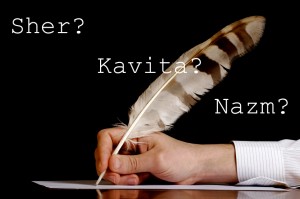
A Ghazal has its origins in the Arabic language and is traditionally considered a more scholarly form of poetry. A ghazal is a collection of shers which follow the rules of matla, maqta, behr, kaafiyaa and radif. A sher is a two lined poem capable of conveying a message without needing anything else to support it. It is therefore essentially a collection of these shers. There are many subcategories of a ghazal and the rules that govern its definition can get very complex. For example, a ghazal is an arrangement of lines whereby the first two lines rhyme with each other which in turn rhyme with the fourth, sixth, eighth and so forth. Each couplet conveys a complete message and may be interconnected to continue a theme. I told you it was confusing didn’t I? Any poem which does not pass the criteria to be considered a ghazal is called a kavita in Punjabi and a Nazm in Urdu.

My Favorite Poets:

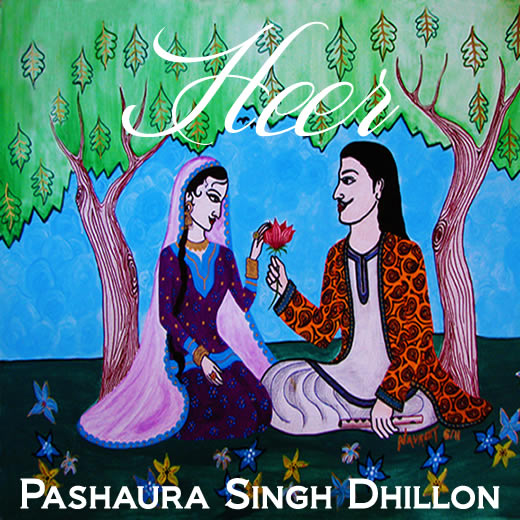
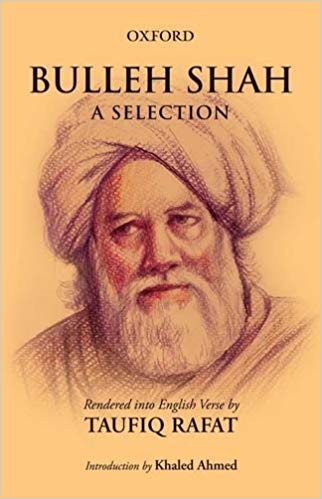
My favorites from the past include Bullhe Shah, Waris Shah, Ali Haider, and Sultan Bahu. Bulleh Shah was a Sufi poet who is most famous for his Kafis or short poems of about six stanzas and Ali Haidar is well known for his Si-harfis which are poems of 30 stanzas each beginning with a letter of the Persian alphabet. Waris Shah is best known for his rendition of the tragic love story of Heer and Ranjha.

Apart from my own poems I also sing selected poems from my favorite poets such as Amrita Pritam, Sukhwinder Amrit, Suikhbir Sandhu, Surjit Pattar, Dr. Jagtar, Shiv Kumar Batalvi, Baba Nazmi and on special request “Heer” by Waris Shah which is my all time favorite.

Related Posts Plugin for WordPress, Blogger...
Share